Text by Zoë De Luca Legge
The Fire and Its Ghosts, a double solo show by Nicola Ghirardelli and Andrea Luzi, presents two artistic practices composed of impetuous and invigorating actions, alongside the contemplation of their consequences, traces, and evocations. For both artists, work is a transformative process in which they act as conduits for co-creative agencies that shape the artwork.
An agent of change and of creative destruction, fire is the element that connects and inflects these two poetics. It relates directly to Ghirardelli’s sculptural process, where he shapes matter and consumes it until it is reduced to a residue, or perhaps a relic. Yet it is also vital and instinctual energy, the mystical glow that animates Luzi’s painterly gesture, capable of illuminating the surface, casting shadows, and evoking archaic presences. Energetic in Luzi’s work and organic in Ghirardelli’s, these forces inhabit the tension between mythological pasts and the future for which they offer visions.
Nicola Ghirardelli’s work takes shape as a research device that moves across sculpture, installation, and site-specific interventions. His practice generates meaning through a system of impressions, archaeological fragments, and natural suggestions selected from everyday life, staging unresolved frictions between the natural and the anthropic. His works are hybrid organisms in which forms of otherness, generational trauma, and apocalyptic omens coexist, in search of a new formal balance.
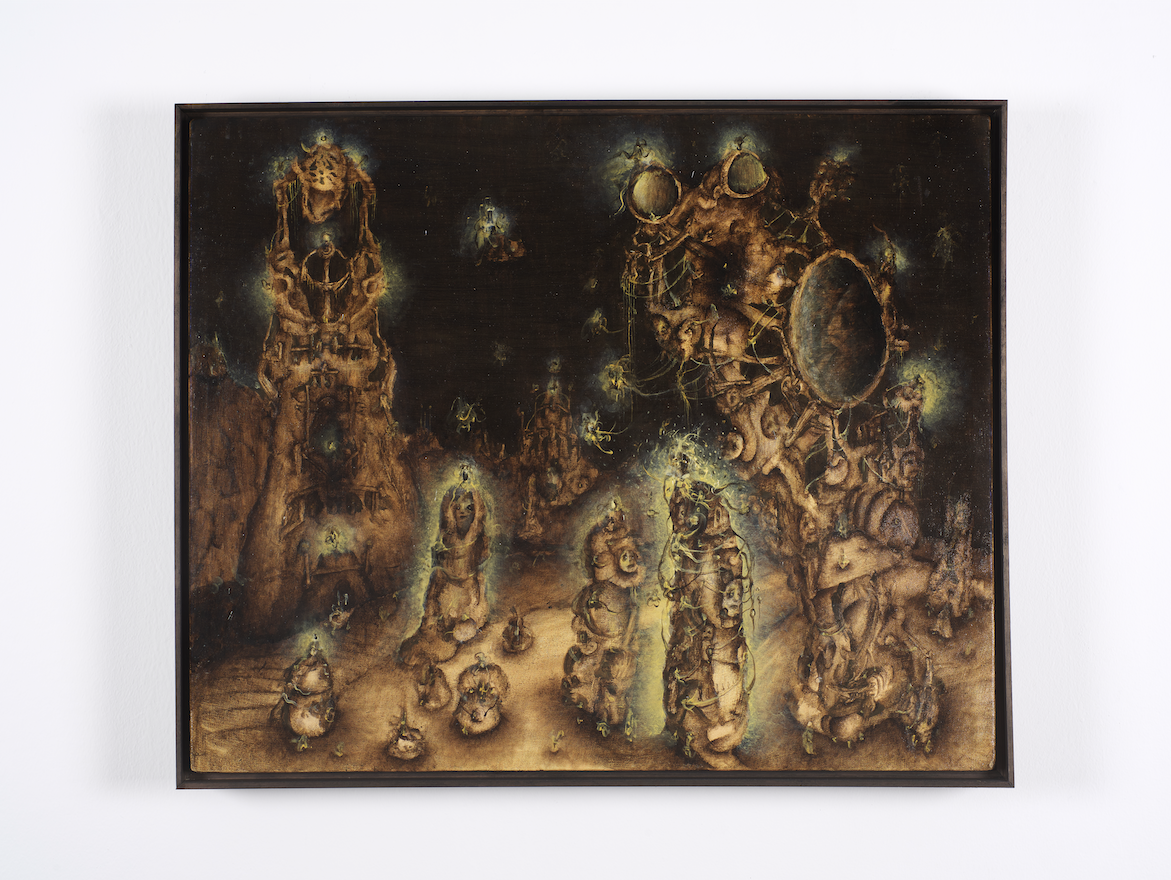
In the first room,Un cumulo di sassi finché non vedi la cattedrale (2026), two plants of Gothic memory rise from quartz and pyrite on basalt, as if reaching for the light emanating from Andrea Luzi’s paintings. Luzi’s works are the result of acts of energetic channeling, rituals that transform gesture into vision. His painterly process begins with a meditative yet instinctive gesture, the result of a deep study of intaglio printmaking and engraving as much as of graffiti culture. The artist thus transfers the discipline of the monotype and the speed of mural painting into his practice, proceeding through complex stratifications.His imagery draws on suggestions that appear distant, if not outright irreconcilable. Popular in its immediacy yet liturgical in its construction—capable of holding together low and high culture—this figurative universe tunes us to other frequencies. InLa signora del gioco (2026), the chromatic rhythm of psychedelic music merges with the iconography of sacred art, creating a ceremonial moment populated by phantasmagoric, obscure, and surreal figures. The composition, with its miniature-like and apparently symmetrical features, recalls liturgical illustration only to abandon its classical perspectives in favor of a more dynamic and vertiginous narrative.
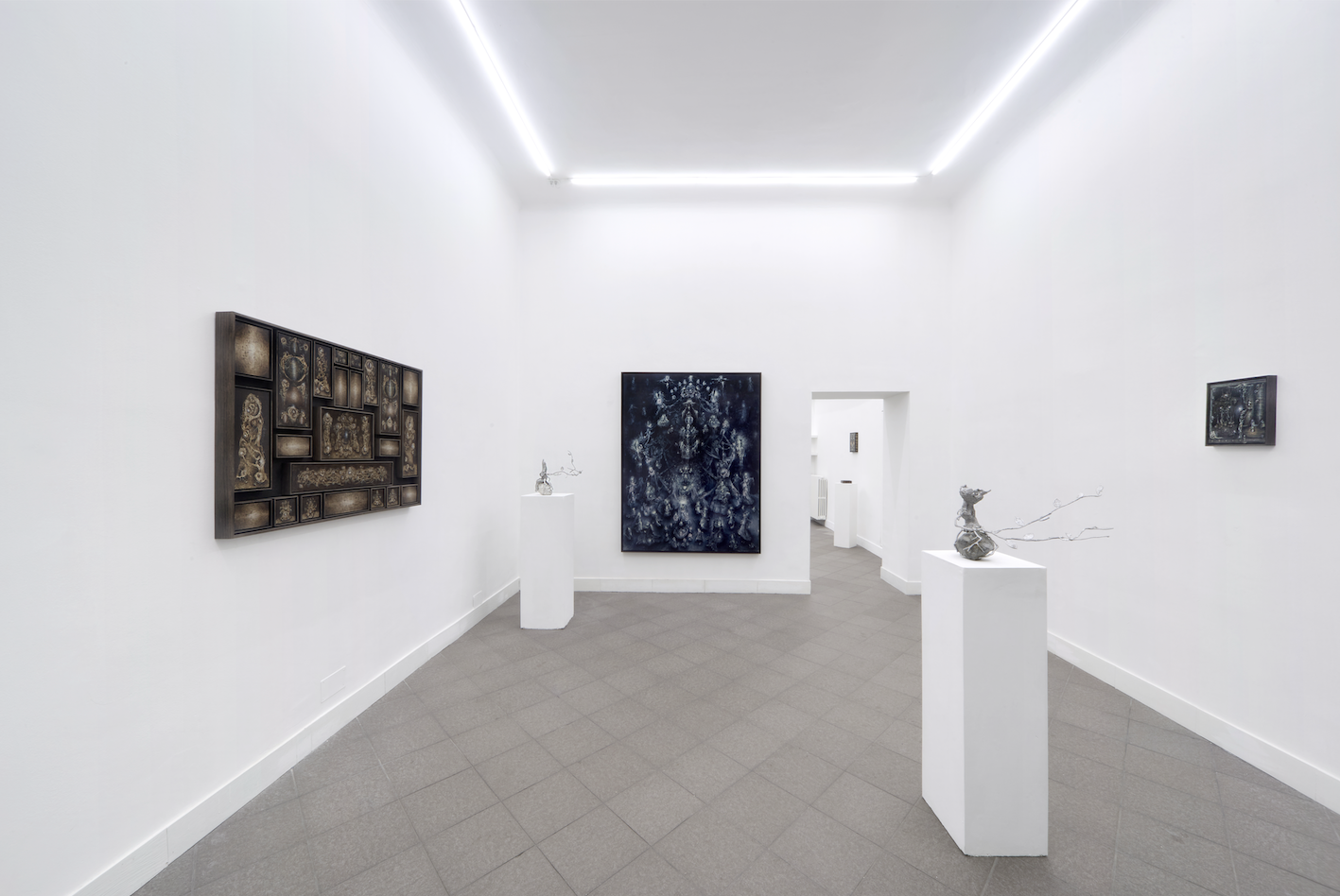

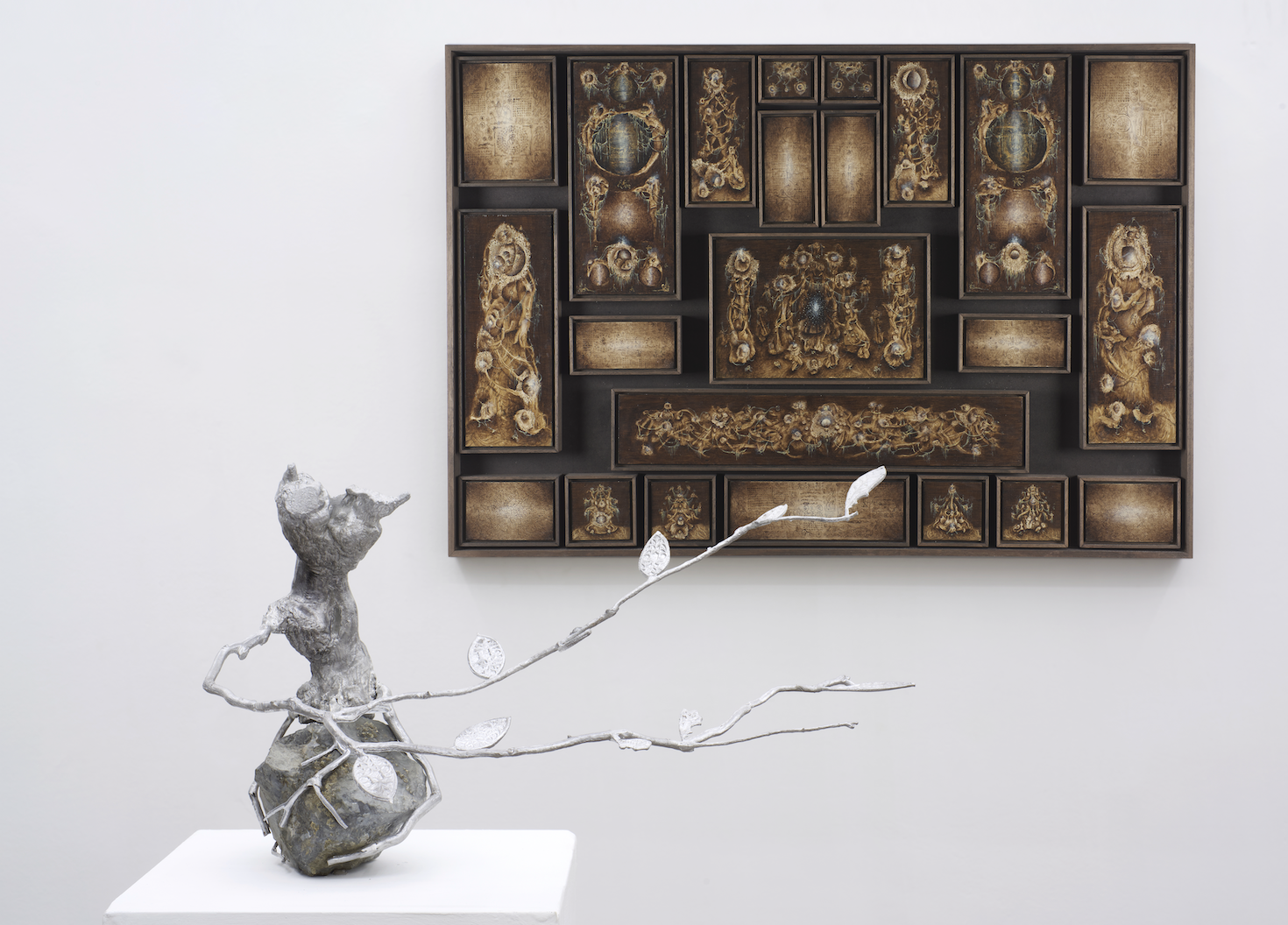

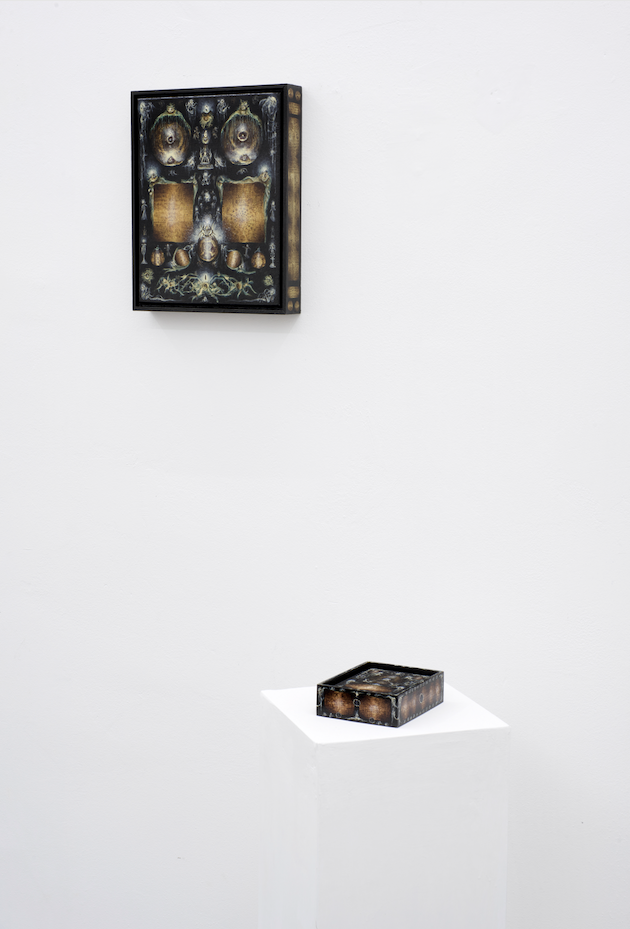
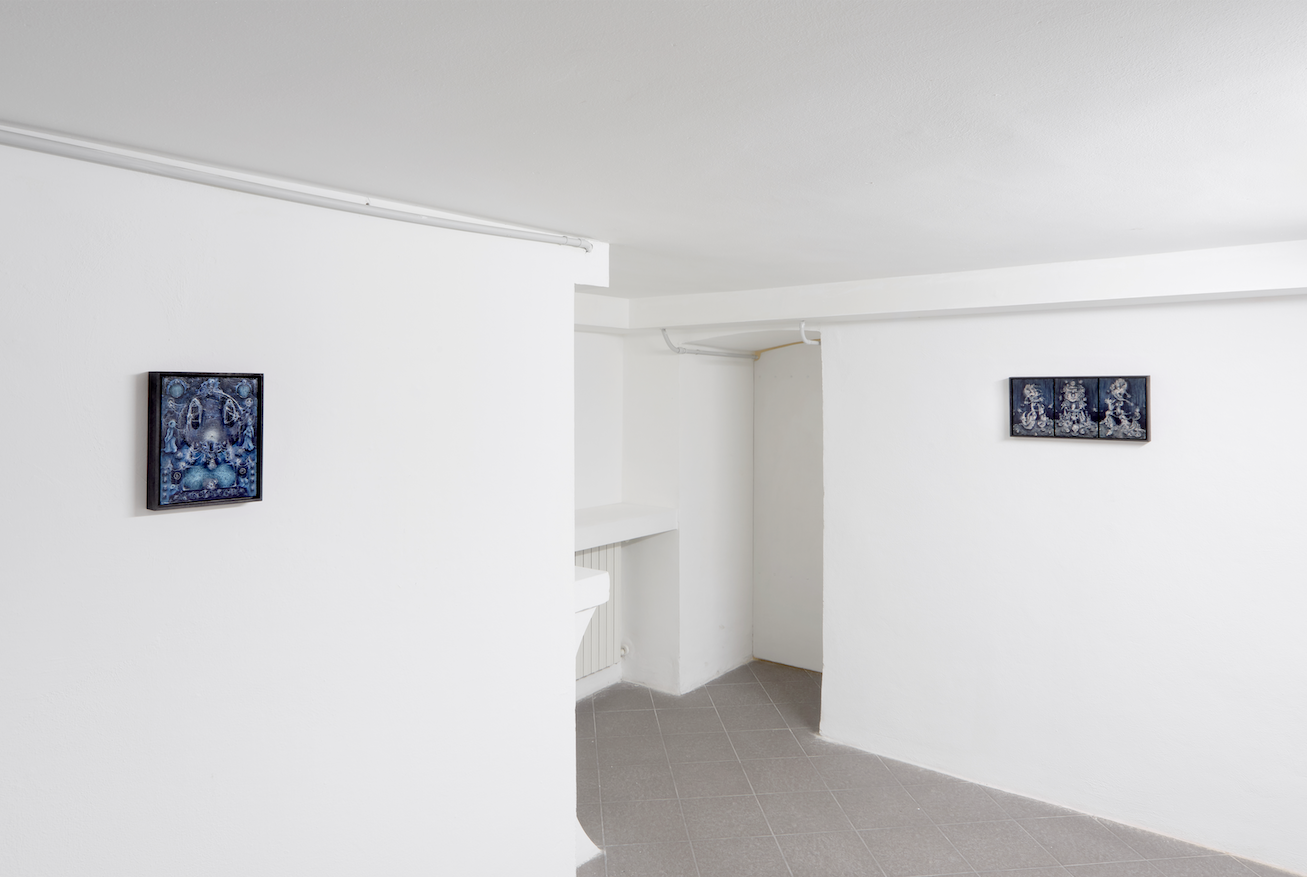


The canvases and wooden panels host these apparitions within their own architectures, moving across different scales. In the polyptychLa grandezza del nulla pt. 3(2026), the work fragments into an infinite visual vocabulary. Its elements expand and fold back into a series of shells, in an attempt to decipher the unknown through an almost encyclopedic painterly gesture.
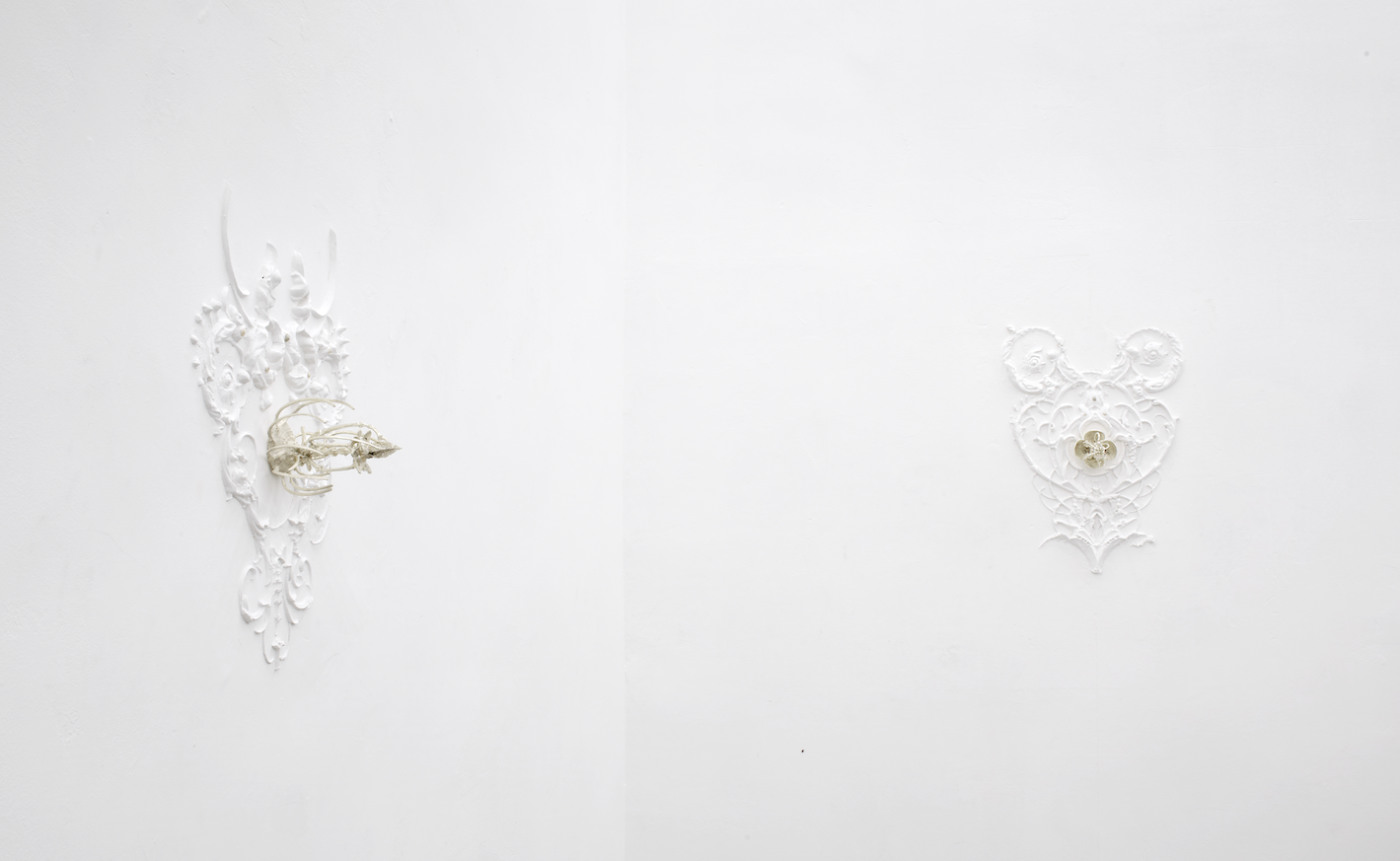
In the following room, the individual panels dramatically decrease in size, losing their vertical dimension and taking on a nearly object-like quality, as inTumulazione di una lacrima (2026). Here it becomes clearer how the artist’s visual repertoire converges into a language that employs codices with a divinatory value. If the paintings initially take shape from an abstract and gestural base, they eventually welcome the emergence of graphic elements that settle on the surface like seals. Figurative elements, symbols, ideograms: each sign carries the potential of a language.These works faceBarrueco (2026), two works by Ghirardelli inspired by the irregular pearls from which the Baroque takes its name. The pair of plaster bas-reliefs echoes the structure of a reliquary, where bone-like elements alternate with mother-of-pearl shells to create a complex frame. At its center emerge delicate structures in silvered brass inspired by valves and poisonous plants.
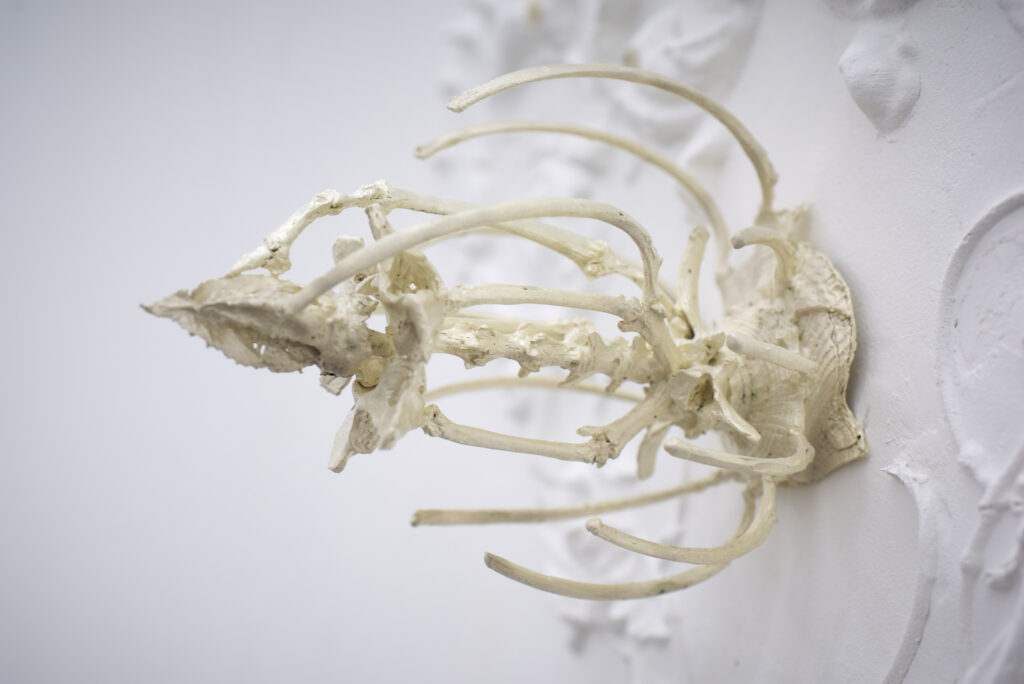
The exploration of matter and its processes of transformation is central to Ghirardelli’s poetics. In his work, fire and biochemical elements actively participate in the coagulation of the artwork, deconstructing the myth of the artist as a solitary creator and opening instead to a more-than-human creative dimension. References from art history graft themselves onto more contemporary morphologies, forming a bestiary of fragile and iridescent shapes that draw on forgotten narratives or stories entirely overlooked by an anthropocentric perspective.
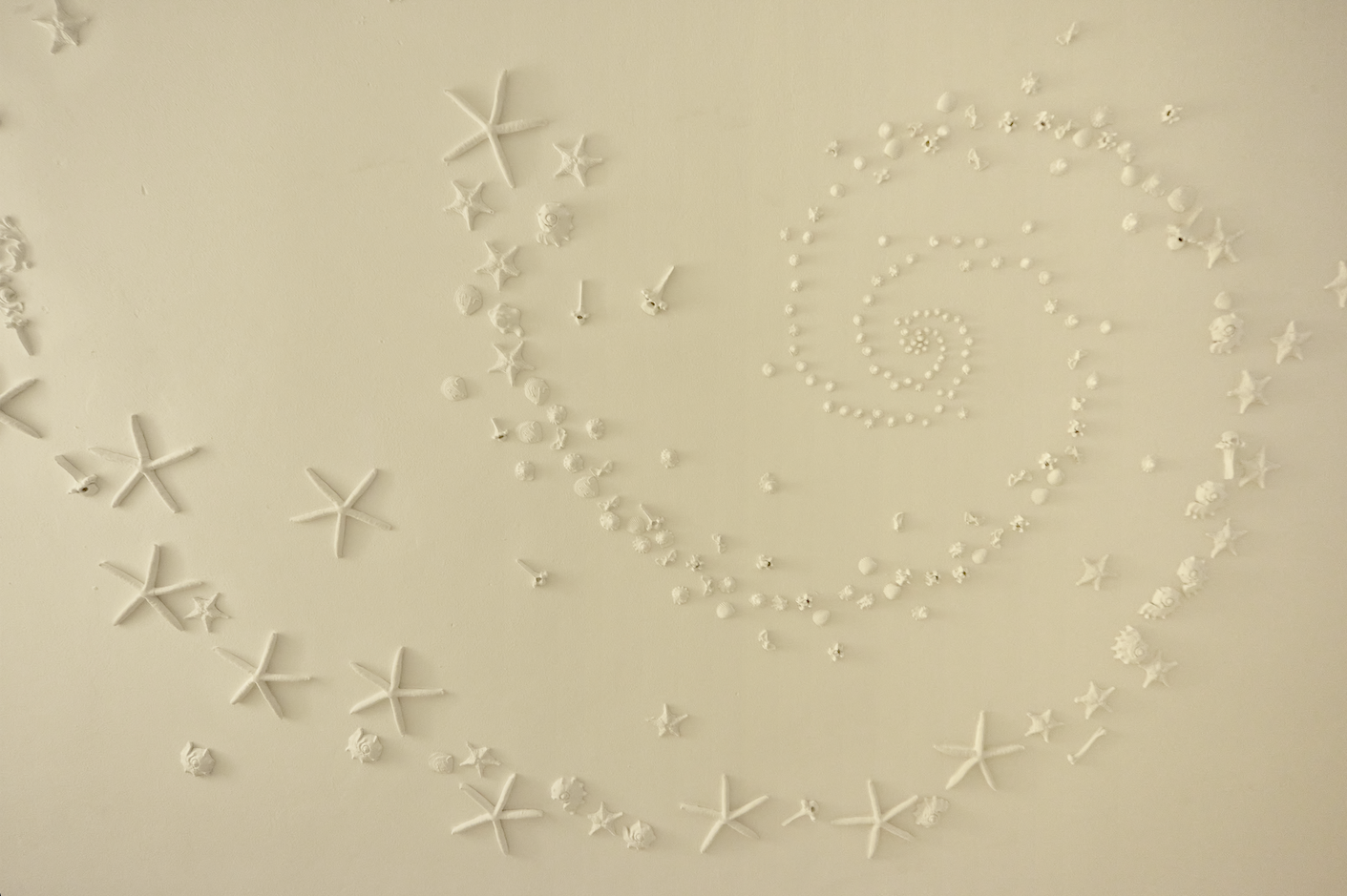
On the lower floor, this intention reaches its fullest momentum inViriditas (2026), a ceiling wall intervention born from research into media archaeology. Inspired by the celestial vaults of Byzantine churches—products of an era in which the biological contiguity between humans and animals was perceived as largely self-evident—this double Fibonacci sequence composed of starfish, shells, and vertebrae guides us towardAgape (2026): a large shell in dark bronze oxidized with sulfur, revealing a mirrored interior filled with water and psilocybe. An invitation to entrust one’s senses to nonhuman agencies, and to experience the exhibition as a new cosmogony.
Available artworks